
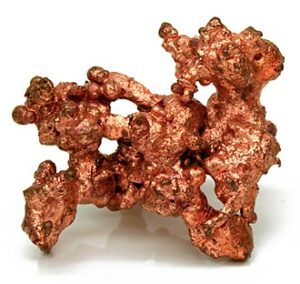
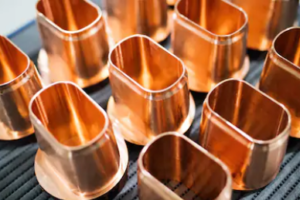
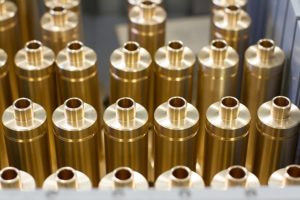
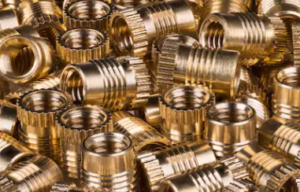



Copper (Cu) is one of the few elements that appears in nature in a usable metallic form.  It is a soft, malleable and ductile metal that has high thermal and electrical conductivity. It has a pinkish orange color and can be found naturally in many places around the world.

In order to enhance or add certain properties, copper is commonly combined with other elements to form copper alloys. Within these alloys, copper is the predominant material but the alloying elements can make up over 40% of the alloy’s composition. The most common alloying element in high amounts is zinc.

Depending on which elements are added to the copper the name of the alloy will also change. The most common copper alloys are brass, bronze, copper-nickel, leaded copper, nickel-silver, and gunmetal.

Machining Copper, Brass and Bronze:

When referring to metals that are often used in machining, the term free machining or free cutting is often used. Free machining materials contain certain elements that add efficiencies such as higher machining speed, improved surface finish, smaller chips and longer tool life.

Common Types of Copper Alloys:

High Copper Alloys

High copper alloys consist of materials containing a copper amount between 96%-99.3%. They maintain high electrical and thermal conductivity due to the high copper contents, but also gain properties of the alloying elements. High copper alloys are used more in casting and forming applications than they are in machining.

Common high copper alloys include:

Brass

When copper is primarily alloyed with zinc it is referred to as brass. The zinc content can vary but it is typically kept under 15% to maintain corrosion resistance in the alloy. Lead is also added in smaller quantities to increase machinability. Brass is known to be strong, machinable, conductive, and corrosion resistant.

Common brasses include:

Bronze

When copper is primarily alloyed with tin, aluminum, or silicon it is referred to as bronze. Known for high strength, ductility, thermal conduction, hardness, corrosion resistance and low friction properties, bronzes are commonly used in bearings, tools, coins, sculptures, and musical instruments.

Common types of bronze:

Copper, Brass and Bronze surface finishes for CNC machined parts:

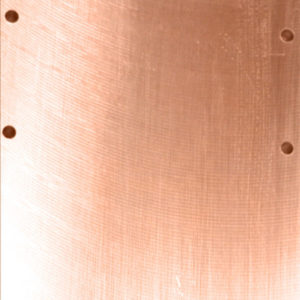
Deburr/Mill

Rough Polish

Bead Blast

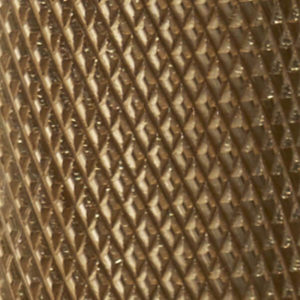
Knurling

Brushing

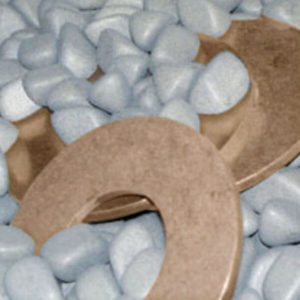
Tumbling

Unified Numbering System (UNS) for Copper and Copper Alloys

Wrought Alloys

  • Coppers: C10100 – C15999
  • High Copper Alloys: C16000 – C19999
  • Brasses: C20000 – C49999
  • Bronzes: C50000 – C69999
  • Copper Nickels: C70000 – C73499
  • Nickel Silvers: C73500 – C79999

Wrought copper alloys are processed by mechanical working such as rolling, extruding, or drawing. They are typically used in electrical, architectural, and industrial applications where high conductivity and ductility are required.

Cast Alloys

  • Coppers: C80000 – C81399
  • High Copper Alloys: C81400 – C83299
  • Brasses: C83300 – C89999
  • Bronzes: C90000 – C95999
  • Copper Nickels: C96000 – C96999
  • Nickel Silvers: C97000 – C97999
  • Leaded Coppers: C98000 – C98999
  • Special Alloys: C99000 – C99999

Cast copper alloys are formed by pouring molten metal into molds to create complex shapes. These alloys offer excellent machinability, corrosion resistance, and wear properties for components like valves, fittings, and bearings.