Tight tolerance machining means holding a dimension to an extremely precise specification, typically +-0.001″ or tighter, where even the smallest deviation affects how the part functions. It is not always the right answer, but most CNC drawings treat it that way. When every feature carries the same precision callout, the quote goes up, the lead time stretches, and the part performs exactly the same as it would have with a smarter spec. This post covers which CNC features actually require tight tolerance machining, which ones don’t, and a practical test you can run at the drawing stage before the file leaves your desk.
When Tight Tolerance Machining Adds Cost Without Adding Value
Every tight tolerance on a CNC drawing has a cost: slower cutting speeds, more demanding setups, additional inspection steps. When a feature earns that cost by affecting how the part functions, it’s worth every dollar. When it doesn’t, when it’s a bolt hole or a clearance pocket holding ±0.001″ for no functional reason, that cost is pure waste.
The problem is not that engineers over-engineer. It’s that the habit of defaulting to tight machining tolerances across the board feels safe. One blanket callout, no decisions to make, nothing that looks loose. But the quote always reflects exactly what was specified.
CNC Features That Require Tight Tolerances
These surfaces drive function. Getting the machining tolerance wrong here affects bearing life, alignment, fit, or sealing, and the part fails in service.
- Bearing seats and precision bores: locate and support rotating components; diameter and roundness directly affect bearing life.
- Locating features and dowel holes: control part-to-part alignment in assemblies; loose specs here cascade into fitment failures.
- Mating and interface surfaces: faces that couple with adjacent parts must be flat and within tolerance or they create gaps and load concentration.
- Sealing surfaces: any feature contacting a seal needs controlled geometry and surface finish.
- Precision fits (shaft/hole pairs): anywhere a specific fit class is engineered, the tolerance must match the mating part.
Tight tolerance machining on these features is protecting function. The cost is earned.
CNC Features That Work Fine at Standard Tolerances
Most drawings have more features in this category than expected.
- Bolt holes: one job, let the fastener through. Unless it’s a locating feature, +-0.010″ to +-0.015″ is adequate. +-0.001″ adds cost and zero function.
- Clearance pockets and mass-reduction features: no contact, no critical dimension. General tolerances work.
- Non-mating faces: surfaces not interfacing with another component can run at standard machining tolerances without functional consequence.
- Chamfers, fillets, and cosmetic geometry: unless a precise angle is required for fit, these can be specified loosely.
A Real Before-and-After: Same Part, Lower Cost
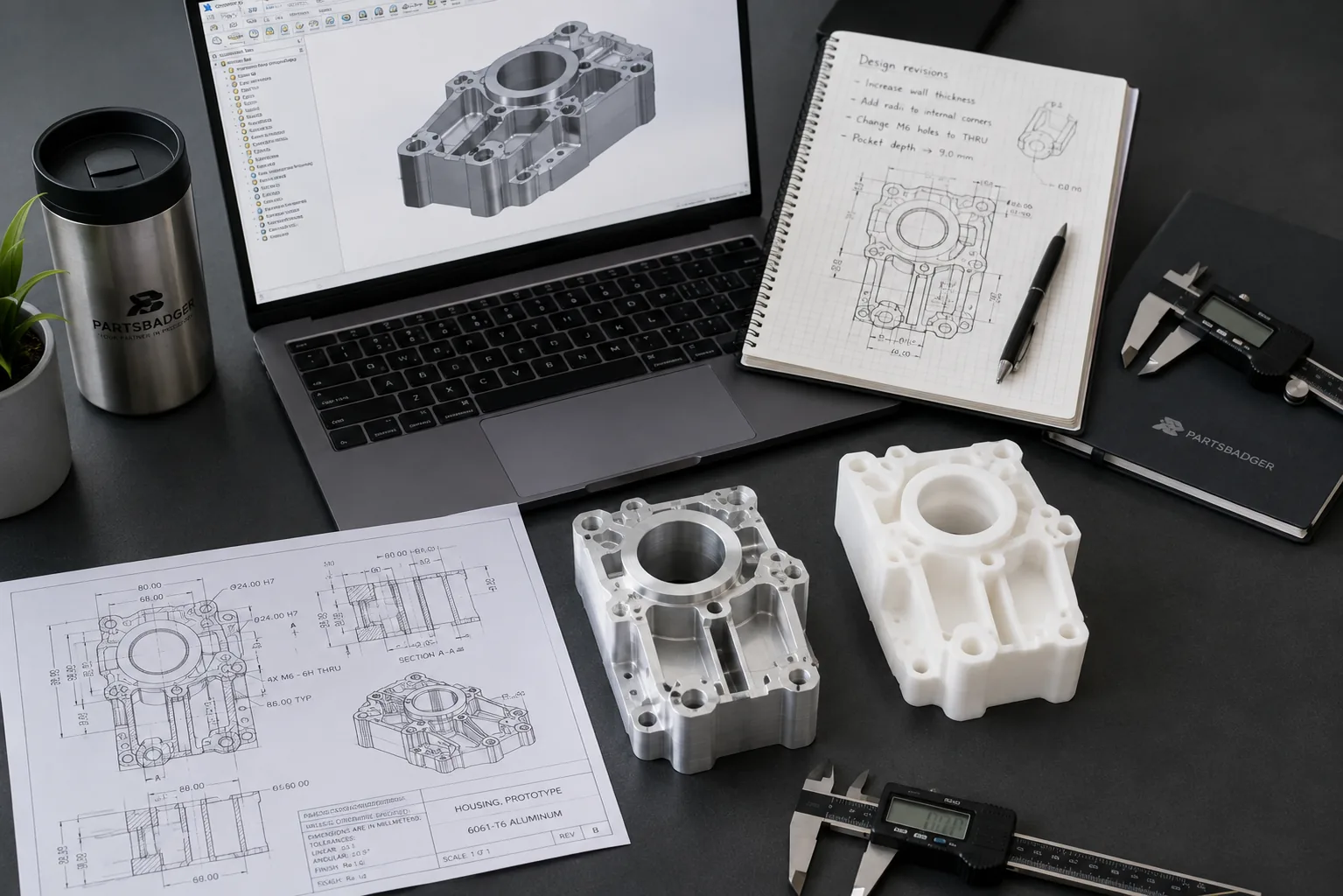
A drawing came in with +-0.030″ applied to every feature on the part. After reviewing the design, only four surfaces actually required tight tolerance machining: one bearing seat, one mating flange face, and two locating dowel holes. Everything else (weight-reduction pockets, an M6 fastener pattern, chamfered edges) had no functional reason to be held that tight. Those features ran at +-0.010″ to +-0.015″. The part performed identically. The quote came in lower and the lead time shortened because the setup was less demanding across the job.
The Three-Question Test for Any Feature on Your Drawing
For every feature, ask: Does this surface couple with, locate, or align another component? Does it seal, support load, or affect motion? And… what happens functionally if this dimension is at the high end of the tolerance band?
If the answers are no, no, and nothing changes, the tolerance can be relaxed. If there is a functional consequence, hold it tight. That distinction is the difference between a tight tolerance machining spec that earns its cost and one that just inflates it.
Not sure which features on your current drawing require tight tolerance machining, upload your file and get a quote fast, or schedule a call with our team to discuss your project and identify where tighter specs are earning their cost and where they aren’t.