CNC Milling Tolerances Buyers Should Understand
When reviewing an engineering drawing, it can be tempting to specify the tightest tolerances possible. After all, tighter sounds better, right?
In reality, that’s rarely the case. Understanding CNC milling tolerances can help you reduce manufacturing costs, improve manufacturability, and ensure precision where it actually matters. The goal isn’t to make every dimension as precise as possible, it’s to specify the level of precision your part truly needs.
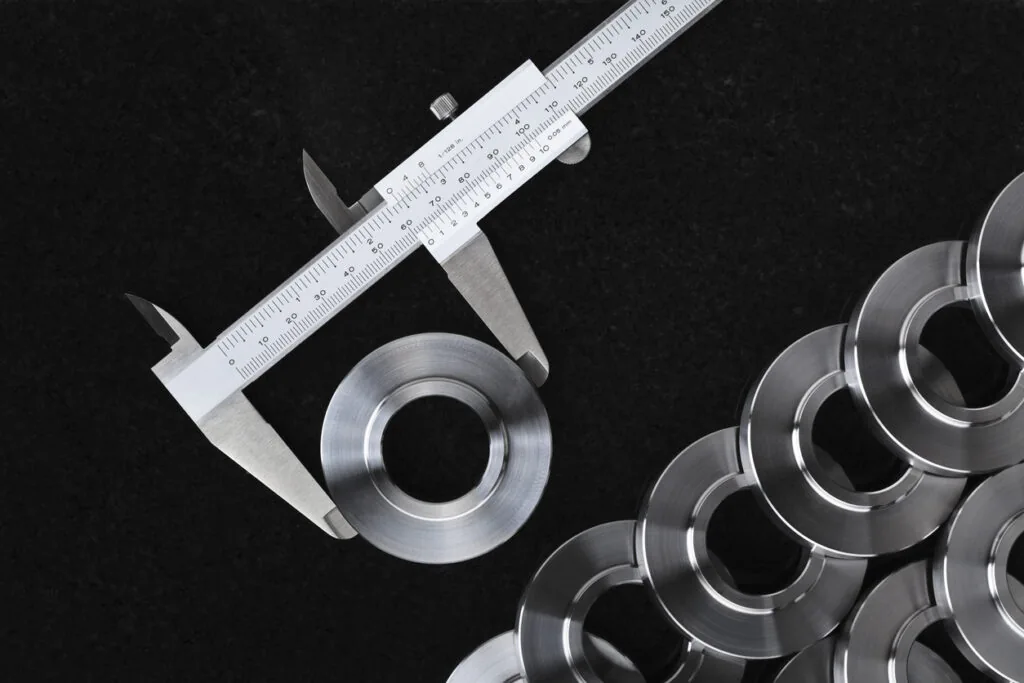
What Are CNC Milling Tolerances?
A machining tolerance defines the allowable variation from a part’s specified dimension. For example, if a drawing calls for a hole diameter of 1.000 inches with a tolerance of ±0.001”, the finished feature can vary slightly while still meeting the design requirements.
Tolerances help manufacturers understand how precise each feature must be to ensure the part functions as intended.
Standard vs. Tight CNC Milling Tolerances
Not every feature requires the same level of precision.
As a general guideline, standard tolerances are typically considered looser than ±0.001”. Tight tolerances are generally tighter than ±0.001”, with PartsBadger typically quoting projects down to ±0.0005”, depending on the design and application.
The tighter the tolerance, the more closely the finished part must match the nominal dimension. Achieving that level of precision often requires additional machining time, more frequent inspections, and greater process control.
If you want to learn more about which features require and which do not require strict tolerances, we have this blog for you.
How Tolerances Affect Cost and Manufacturability
One of the biggest misconceptions is that tighter tolerances automatically produce a better part.
In reality, every increase in precision adds complexity to the manufacturing process. Tight tolerances often require:
- Slower machining speeds
- Additional inspection and measurement
- Greater process control
- Higher risk of part rejection if dimensions fall outside specification
These factors increase manufacturing time and, ultimately, the cost of the part.
For many components, standard tolerances provide all the accuracy needed while keeping production efficient.
When Tight Tolerances Are Worth It
Tight tolerances should be reserved for features where precision directly affects part performance.
Common examples include:
- Bearing fits
- Mating components
- Sealing surfaces
- Alignment features
- Critical interfaces between assembled parts
In these applications, maintaining precise dimensions helps ensure proper fit, function, and reliability.
When Standard Tolerances Are Usually Enough
Many features don’t require extremely tight tolerances.
Components such as mounting brackets, machine covers, fixture plates, and other structural parts often perform exactly as intended using standard tolerances.
Applying unnecessarily tight tolerances across an entire part may increase cost without providing any functional benefit.
Practical Guidance: How to Specify Tolerances More Effectively
Before finalizing your drawing, consider these best practices:
- Apply tight tolerances only to critical features. Reserve higher precision for dimensions that directly affect fit or performance.
- Avoid using the same tolerance everywhere. Not every feature requires the same level of accuracy.
- Clearly identify critical dimensions. This helps manufacturers focus inspection where it matters most.
- Balance precision with manufacturability. Choosing the appropriate tolerance for each feature can reduce machining time and improve overall project cost.
Should you always specify tight CNC milling tolerances?
No. Tight CNC milling tolerances should only be specified when they are functionally required. Applying tighter tolerances than necessary increases machining time, inspection requirements, and manufacturing costs without improving the performance of non-critical features.
Key Takeaways
- Tighter tolerances are not always better.
- Standard tolerances are often sufficient for non-critical features.
- Tight tolerances increase machining time, inspection, and manufacturing costs.
- Apply higher precision only where function requires it.
- Matching tolerances to the application helps improve both manufacturability and cost.
Still Unsure Where to Apply Standard and Tight Tolerances?
If you’re ready to move forward, upload your CAD files to request a quote. During the quoting process, the PartsBadger team reviews your design requirements to help ensure your project is quoted using the appropriate manufacturing approach.