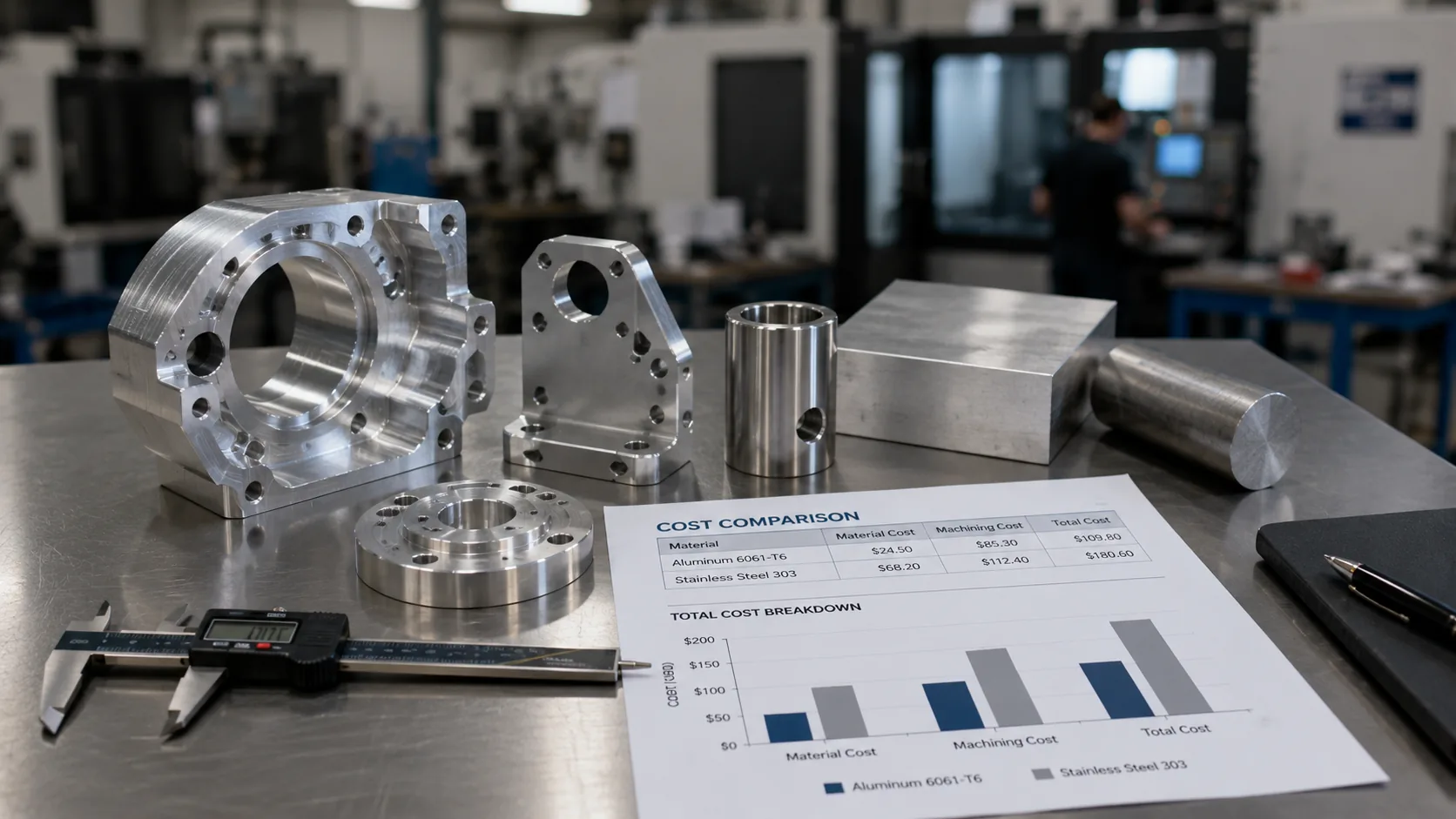
Understanding what drives the cost of CNC machining services costs helps buyers make informed sourcing decisions and avoid unexpected expenses. While two parts may appear similar, small differences in design, material, or production requirements can significantly impact the final quote.
The good news is that many cost drivers are within your control. By understanding what manufacturers evaluate during the quoting process, you can reduce costs without compromising part quality or performance.
What Determines CNC Machining Services Costs?
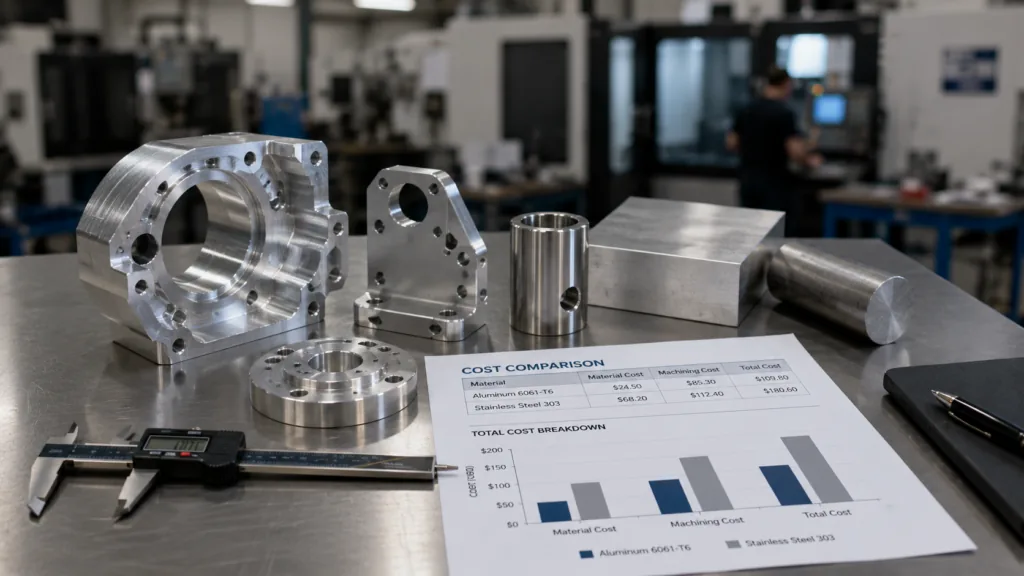
Every CNC machining quote is based on the time, resources, and complexity required to manufacture a part. Although every project is unique, most pricing decisions are influenced by six key factors.
1. Material Selection
Material is often one of the largest contributors to project cost.
Some materials are more expensive to purchase, while others require slower machining speeds, specialized tooling, or additional setup time. High-performance alloys, stainless steels, and titanium generally require more machining effort than common aluminum grades.
When your application allows flexibility, selecting a material that offers similar performance with better machinability may reduce overall cost.
Learn more about Material Sourcing Strategies.
2. Part Geometry
Simple parts typically require fewer machining operations than complex designs.
Deep pockets, thin walls, sharp internal corners, and difficult-to-reach features can increase machining time and require specialized tooling. Features that require multiple setups also add labor and inspection time.
Designing with manufacturability in mind helps reduce unnecessary complexity while maintaining functional requirements.
3. Tolerances
Not every feature requires extremely tight tolerances.
Specifying tighter tolerances than necessary increases machining time because operators must use slower cutting parameters and perform additional inspection. According to PartsBadger’s technical guidance, standard tolerances are generally considered looser than ±0.001”, while the company typically does not quote tolerances tighter than ±0.0005”.
Whenever possible, apply tight tolerances only to critical features rather than across the entire part.
4. Surface Finishes and Secondary Operations
Additional finishing processes add both time and cost.
Common secondary operations include:
- Anodizing
- Passivation
- Powder coating
- Plating
- Heat treating
- Additional inspection
These processes are often essential for corrosion resistance, appearance, or performance, but they should only be specified when required by the application.
5. Order Quantity
Production quantity has a major impact on unit price.
Programming, setup, tooling, and machine preparation represent fixed costs that are distributed across every part produced. As quantities increase, those costs are spread over more components, reducing the cost per part.
For prototypes or low-volume production, higher unit prices are expected because setup costs are shared among fewer pieces.
6. Need Parts Faster? See If Your Project Qualifies for Expedited Machining
Even the best-prepared RFQ can’t change an urgent deadline. If your project is time-sensitive, PartsBadger’s Expedited Machining service may be able to help.
Unlike many machine shops that charge significant rush fees, PartsBadger manufactures qualifying parts in as little as two business days with no additional expedited machining costs. Projects are automatically evaluated during the quoting process, and if your part meets the qualification criteria, you’ll receive the faster lead time without paying extra.
Think your project might qualify? Visit our Expedited Machining page to learn about the qualification requirements and see whether your part is a good fit before requesting your quote.
Practical Ways to Reduce CNC Machining Costs
Buyers can often reduce project costs without changing suppliers by following a few best practices:
- Use standard materials whenever possible.
- Specify tight tolerances only where functionally required.
- Simplify part geometry to reduce machining time.
- Combine quantities into larger production runs when practical.
- Submit complete RFQs with CAD models and manufacturing requirements.
- Discuss alternative materials or finishes with your manufacturing partner.
Many of these decisions can improve both pricing and manufacturability before production even begins.
Final Thoughts
The lowest quote doesn’t always represent the best value. A reliable manufacturing partner should help you understand what influences CNC machining services cost and identify opportunities to reduce expenses without sacrificing quality.
By considering material selection, tolerances, geometry, finishing requirements, production quantity, and lead time early in the design process, buyers can make smarter sourcing decisions and achieve better long-term results.
Planning your next CNC project?
Upload your CAD files to PartsBadger to receive an accurate quote and learn how design and manufacturing decisions can help optimize both cost and lead time.