Low-Volume CNC Machining: When to Use Small Batch Production
Moving from a successful prototype to full production isn’t always the right next step.
You may need parts for product testing, a pilot build, initial customer orders, replacement inventory, or a design that could still change. In those situations, investing in dedicated tooling or committing to a large production run can add cost and risk before the design or demand is ready.
Low-volume CNC machining fills that gap. It gives manufacturers a way to produce functional parts in smaller quantities while maintaining the flexibility to make changes before scaling.
What Is Low-Volume CNC Machining?
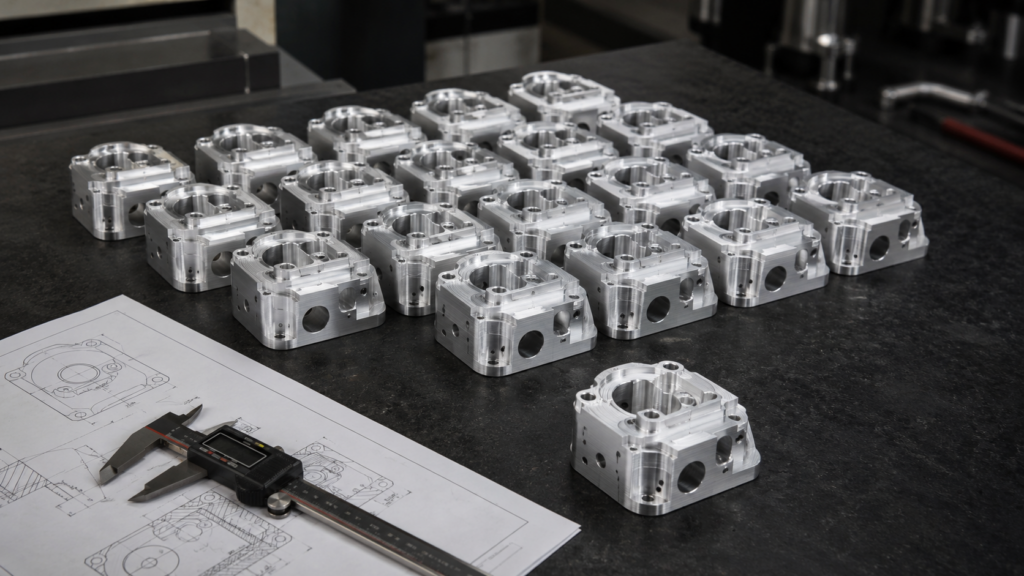
Low-volume CNC machining is the production of relatively small batches of machined parts using computer-controlled milling, turning, or other CNC processes.
Unlike processes that require dedicated molds, dies, or other production tooling, CNC machining produces parts directly from a digital model and raw material. That makes it well suited to quantities beyond the prototype stage but below the point where high-volume tooling becomes economically attractive.
There isn’t one quantity that defines a “low-volume” order. Part size, geometry, material, tolerances, setup requirements, and expected future demand all affect where the economics change.
The better question is: Does the project need production parts without the commitment of full-scale production?
When Does Small Batch CNC Production Make Sense?
Low-volume CNC is especially useful when a project has moved beyond proving that a design works but isn’t ready for thousands of identical parts.
Pilot and Pre-Production Runs
Before scaling production, a small batch can help validate more than the design itself.
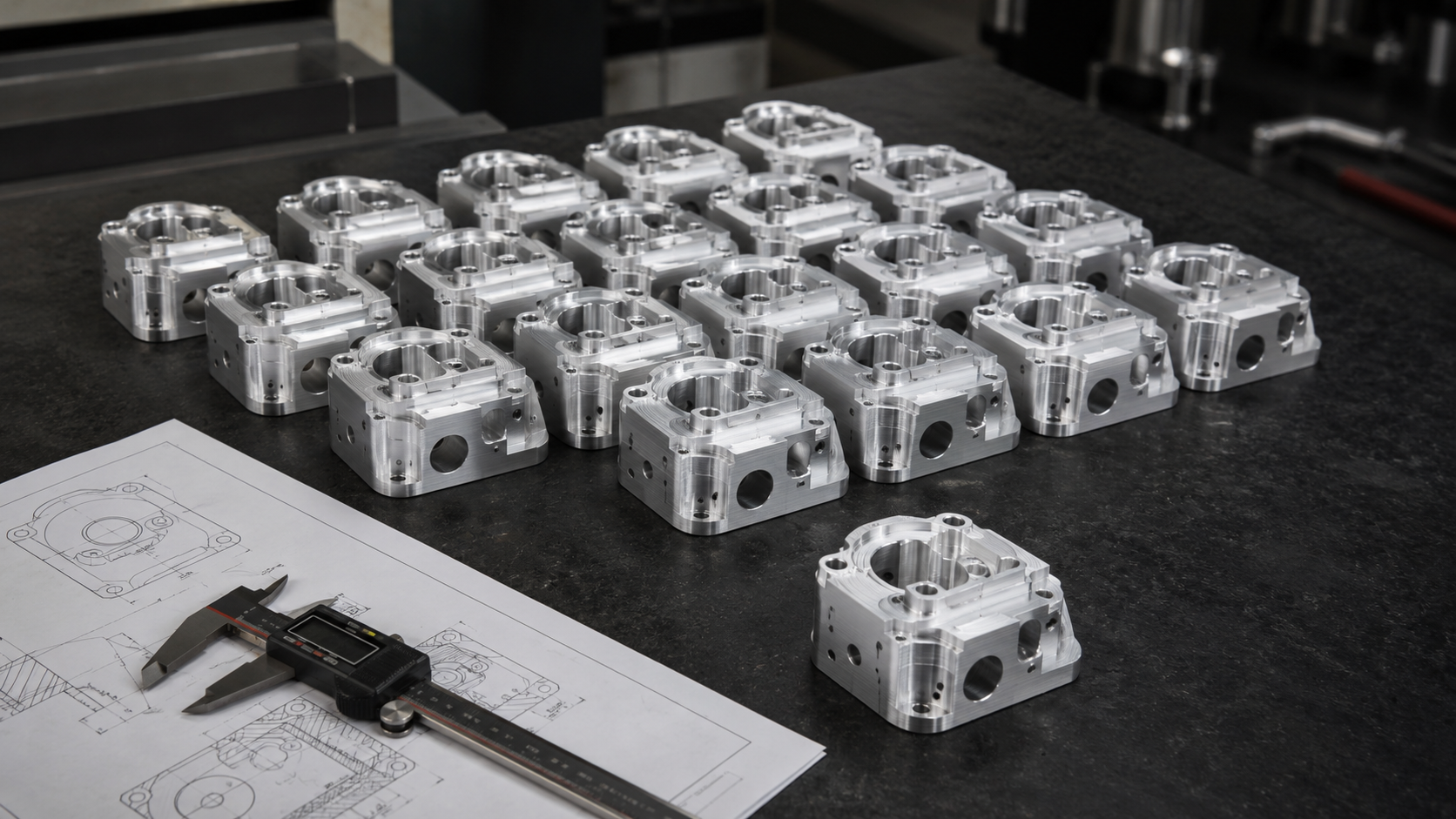
Pilot runs give engineering and production teams an opportunity to test assembly procedures, inspect repeatability, identify manufacturing issues, and confirm that the part performs as expected under real-world conditions.
Problems discovered at this stage are generally easier to address than after committing to a large production run.
When the Design May Still Change
A working prototype doesn’t necessarily mean a design is finished.
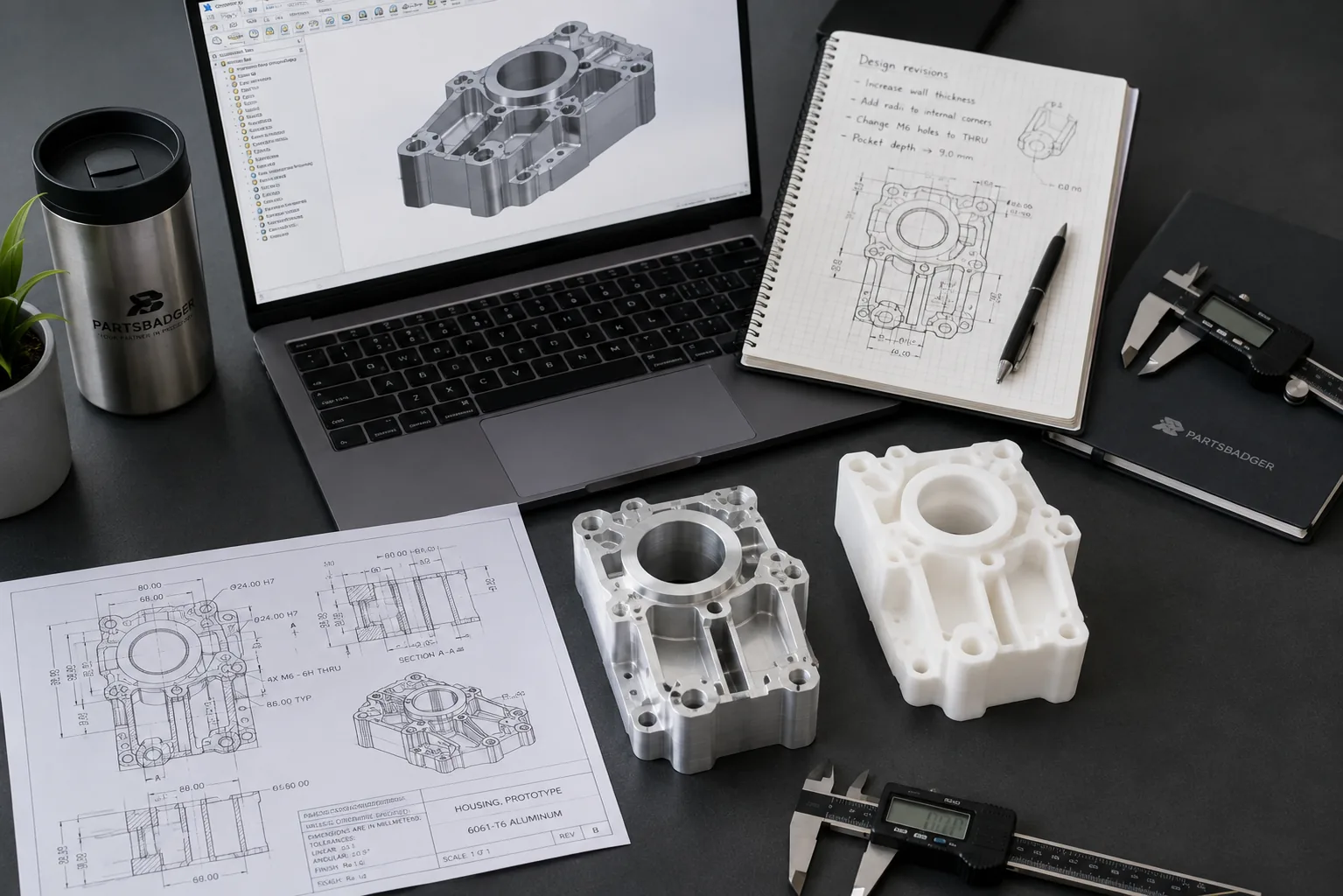
Feedback from testing, assembly, suppliers, or customers can lead to another revision. CNC machining makes those changes relatively straightforward because production is driven primarily by the CAD model and machining program rather than dedicated tooling.
If a hole moves, a feature changes, or a tolerance is adjusted, the next batch can reflect the revised design without replacing a mold or die.
Bridge Production
Sometimes demand arrives before the long-term manufacturing process is ready.
Small batch CNC production can provide usable parts while a company validates demand, prepares dedicated tooling, qualifies another production process, or ramps toward larger quantities.
Instead of treating prototyping and production as two separate stages, low-volume machining creates a practical bridge between them.
Low-Volume CNC Machining vs. Production Tooling
The decision often comes down to upfront investment versus cost per part.
Production tooling can make sense when a design is stable and demand is high enough to justify the initial investment. Once tooling is established, processes such as injection molding can deliver significant advantages at higher volumes.
CNC machining approaches the economics differently.
Because CNC parts can be produced without dedicated production tooling, upfront investment is generally lower. The trade-off is that machining time continues to contribute to the cost of every part.
That makes CNC particularly useful when:
- Production quantities are relatively small.
- Demand is uncertain or variable.
- The design may change.
- Tooling costs are difficult to justify.
- Parts are needed before a high-volume process is ready.
- Multiple design versions need to remain in production.
As quantities grow and the design becomes stable, it may be worth evaluating whether another manufacturing process offers better long-term economics.
Don’t Look at Quantity Alone
Choosing a manufacturing process based only on the number of parts can lead to the wrong decision.
A simple component needed in larger quantities may still be a strong CNC candidate, while a complex part with significant machining time could reach its economic crossover point much sooner.
Material, geometry, tolerances, surface finish, setup requirements, inspection requirements, and future order frequency can all affect cost.
This is why the transition from prototype to production isn’t defined by a universal quantity.
It’s a manufacturing decision based on the part, the expected demand, and how much flexibility the project still needs.
From Prototype to Production
Low-volume CNC machining gives engineering and procurement teams room to move forward without locking a project into full-scale production too early.
It can support pilot builds, small production runs, design revisions, replacement parts, and bridge production while providing a path toward larger quantities when demand is ready.
PartsBadger supports projects across different stages of the manufacturing lifecycle, from prototypes and small batches through larger production requirements.
Explore our Manufacturing Solutions to see how PartsBadger can support the next stage of your project, or upload your CAD files to request a quote.